Attention · impulse · reward
A format that never lets the mind finish.
A long video has an ending. A book has a last page. A short-form feed has neither. The brain systems that hold a goal, ignore a lure, and stop a habit are the same ones the format leans on all day.
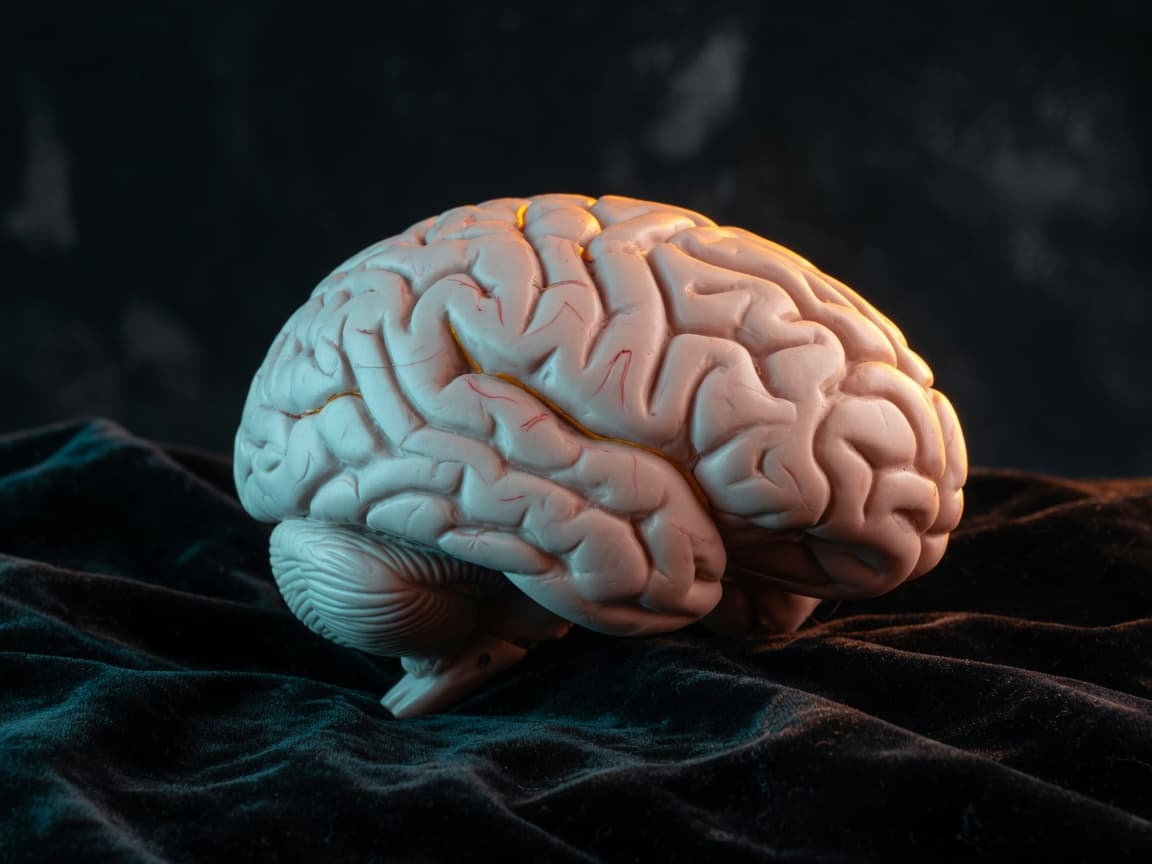
Three regions the research keeps touching
Focus, planning, saying no
Prefrontal cortex
EEG work has linked higher short-video addiction scores with weaker prefrontal theta during control tasks — the rhythm that helps you stay on something that does not ping every fifteen seconds.
Attention is not a moral virtue
It is a limited control system. Rapid cuts, new faces, new sounds, new text overlays — then another clip before you have encoded the last one — is a workout in switching, not in staying. After enough of that workout, a paragraph feels like a steep hill.[Source]
Inhibitory control is the off switch
It is the ability to not tap, not swipe, not open. It is also the largest cognitive association in the 2025 review (r = −.41). That is an ugly loop: the more the feed is used in an out-of-control way, the weaker the very function you need to leave.
Habituation: why books start to feel broken
The review points at a dual process: you get used to high stimulation, and you get extra-sensitive to the next spike. Slow, effortful work does not spike. So the mind files it as “nothing is happening.” That is not a character flaw. It is a trained comparison.
Fragmented input, thinner memory
When researchers held time and content constant and only changed whether the video was one piece or many clips, recall got worse after the clips. Brain scans showed weaker activity and connectivity in systems that bind information together. The feed is not just stealing minutes. It is chopping the minutes you kept.[Source]
A small live demo
Read one short passage while fake clips try to steal the edge of your vision. Then answer two questions. This is not a lab. It is a feeling the lab has been measuring.